

Wilbur Repp always wanted to help out the little guy. Even today, more than three years after his passing, the longtime middle school teacher and Selah native is giving back to the communities he held dear.
One of Repp’s dying wishes was to provide underprivileged youths with the resources they would need to improve their lives after high school. In late 2020, as he was battling terminal cancer, he chose to dedicate a large portion of his estate to the Selah School District so he could help students find future opportunities even if they chose not to attend college.
The nearly $3.7 million Repp donated to the district will eventually go toward building a new Career and Technical Education (CTE) center on a patch of land next to Selah High School.

CTE is a national program that prepares youths and adults for a wide range of high-wage, high-skill, high-demand careers, such as agricultural science, health sciences, engineering, manufacturing, business, marketing, computer science, construction and hospitality. The Selah School District program has been growing steadily in recent years, with both the high school and middle school embracing it as a way to give students opportunities to explore career interests that may not require a college degree.
“My brother’s whole life was about helping underprivileged people — always,” said Repp’s sister Nilah Webster, who now lives in Yakima. “He wasn’t a great student, and he wasn’t a very popular kid. So, when he eventually had the means to help people who were in his same category, he did whatever he could. That was his goal.”
She added that Repp was a “very Christian man” whose sole intention in life was to lift up others.
“He gave more than I ever realized when he was alive,” Webster said. “But he wasn’t public about his generosity. He didn’t want any attention; he just did it.”
After high school, Repp attended Pacific University, a Christian institution south of Portland, before joining the military. Once he completed his service, he taught in the Kent School District for 25 years. When he wasn’t in the classroom, he was a property manager of more than 30 residential buildings, which helped him amass a significant fortune.
“Our parents helped him buy his first house in Renton, and he refurbished it and rented it out,” Webster said. “Over time, he would buy properties and work on them in his spare time and over the summer. By the time he died, he owned 32 properties.”
Most of Repp’s properties were low-income Section 8 Housing. Webster said he was a very compassionate property manager who did anything he could to help his tenants remain in their homes.
“If they couldn’t come up with their fair share, he would work with them, or he would give them jobs so they could compensate for what they owed,” she said. “His goal wasn’t to make money; it was to help people.”
That spirit also shined through during Repp’s educational career. Webster said her brother was always looking for ways to mentor the students who needed a little extra inspiration.
“He tried to help the kids who sat in the back row and never got any attention,” she said, “because that’s who he was when he was in school.”
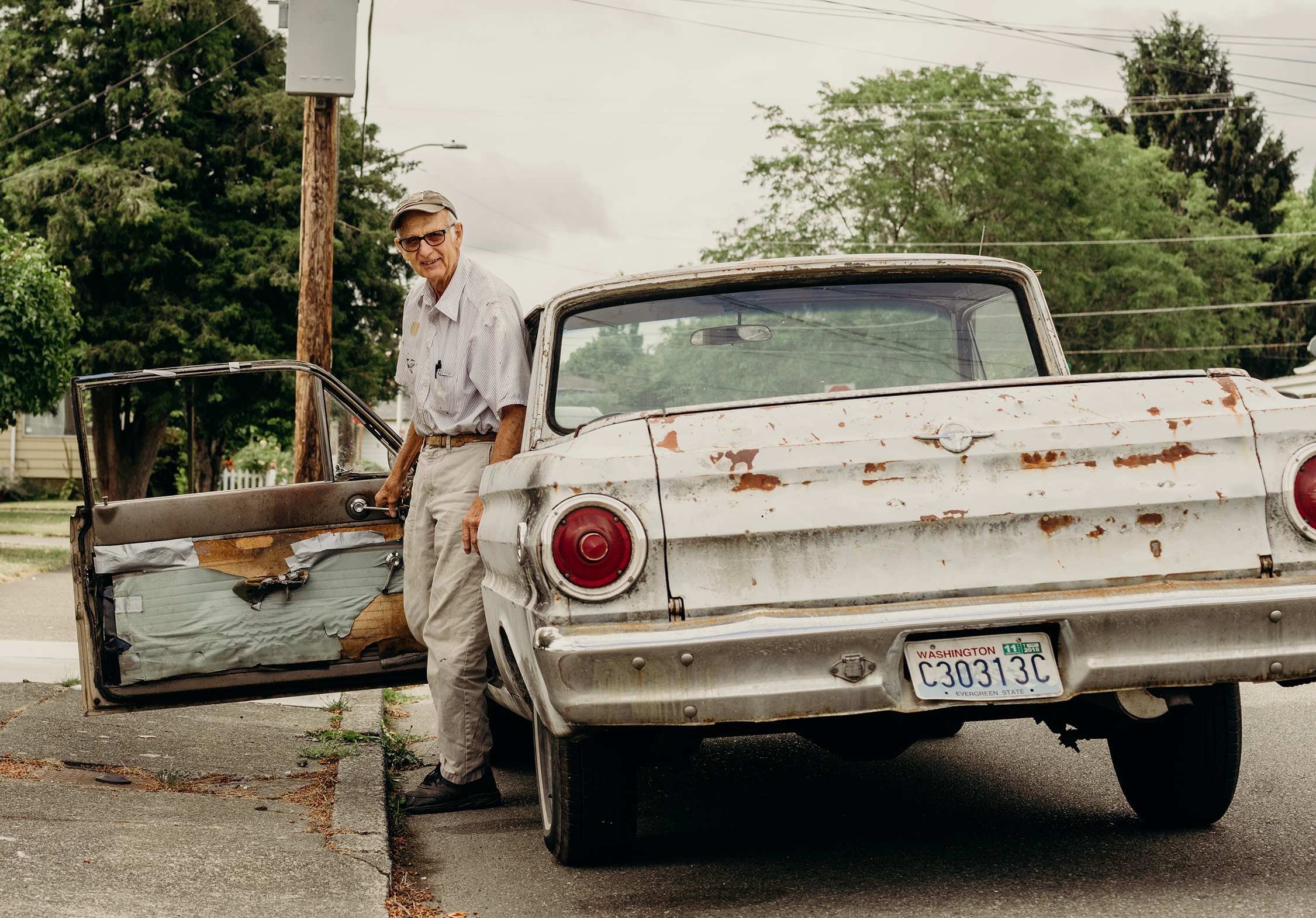
Giving Back to His Hometown
Wilbur Repp’s passion for education and promoting the advancement of others became evident to the Selah School District in late 2020, when his lawyer reached out to express Repp’s wishes to donate a significant sum to the district — $3.65 million initially, and still growing in a trust fund.
A few months before he died, the 1953 Selah High School graduate told Associate Superintendent Chris Scacco that he wanted to give a portion of his estate back to his home community. Repp donated a similar amount to the Kent School District to set up an endowment for vocational training.
“It really warmed my heart,” Scacco said. “This man, who was dying from cancer, was trying to figure out a way he could give back to the district he grew up in and the one he taught in for 25 years. He talked about how too many kids were falling through the cracks, and he wanted to find a way to help them. That’s when we started talking about CTE.”
Instead of using the money for a scholarship fund, which would help only a handful of students per year, Repp agreed to put his donation toward the construction of a CTE center, which has the potential to benefit hundreds of students every year in perpetuity.

The first donation of $1.5 million was deposited in December 2020, followed by $1 million in April 2022, and $1.15 million in June 2023. The fund has been accruing interest since day one and will go a long way toward building a CTE center that all students in the district can access.
“Mr. Repp’s interest was to help students find a career path even if they didn’t choose to go to college,” Scacco said, adding that 41% of Selah High School graduates currently enroll in a two- or four-year institution after graduation.
Scacco noted that around 40% of 1,100 students at the high school are currently accessing CTE pathways, while 29% of middle-schoolers have already gotten involved in the program since it was expanded with the help of the district’s Director of Futures Jeff Cochran.
“With Jeff’s leadership, this program has been very effective at giving our students industry-aligned experience while they’re still in high school,” Scacco said. “Some of the trades don’t require a college education. But, no matter what our students end up doing, our goal is to help them make the best decisions for themselves before they leave us.”
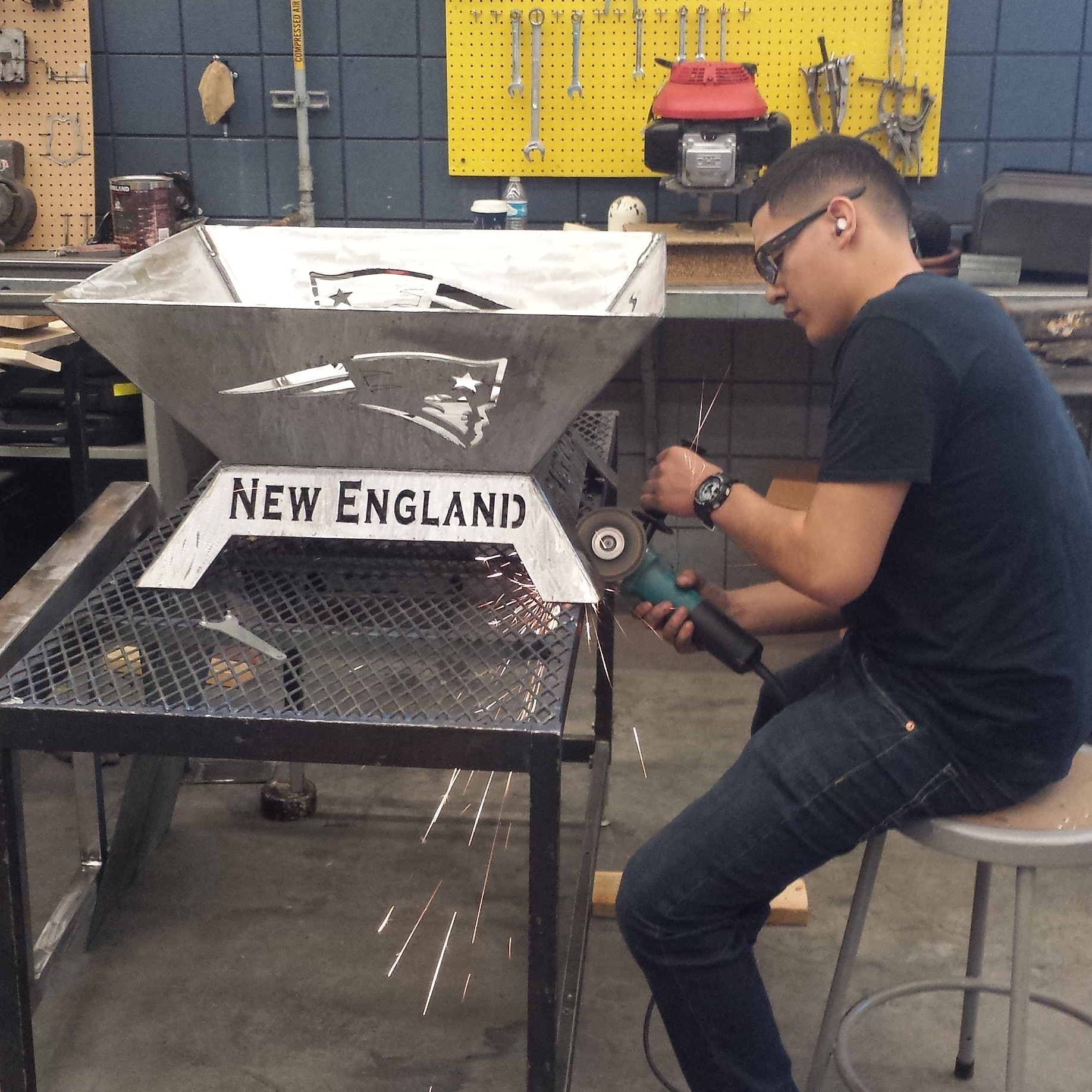
Construction of the center — slated to be built on Wernex Loop, adjacent to the high school — won’t likely begin for a couple of years because the full cost of the facility will be around $15 million. But Repp’s generosity has made that goal far more attainable than it would have been otherwise.
As a result, the school board has already said it will name the new structure in honor of Repp.
“What’s so heartwarming about this donation is that it will last far into the future,” Scacco said. “His donation will impact thousands of students over several years, and it will fulfill his goal of creating opportunities for all kids — not just the ones who can afford to go to college.”
 Dave Leder